
25 Website Marketing Tips and Tricks That Actually Work
Your website is either your hardest-working salesperson or your most expensive digital brochure. The difference is not design — it’s strategy. Specifically, whether you have built a system that attracts the right visitors, engages them with value, and converts them into leads and customers at a predictable rate.
Inbound marketing is that system. Unlike outbound advertising — which interrupts people who weren’t looking for you — inbound marketing attracts people who are actively searching for what you offer, earns their trust with genuinely useful content, and converts them when they’re ready to act. These 25 tips are the practical mechanics of building that system on your website — organized from technical foundations through to analytics and iteration.
Why Inbound Marketing Beats Outbound — and How Your Website Powers It
Traditional outbound marketing — cold calls, display ads, direct mail, and paid placements — reaches people who weren’t looking for you and interrupts what they were doing. Nearly 40% of internet users have ad blockers installed, and banner ad click-through rates have fallen below 0.1%. The economics of interruption marketing are deteriorating steadily.
More leads generated by inbound marketing compared to outbound — at 62% less cost. Organic search leads convert at 8.5x the rate of outbound leads. The long-term ROI advantage compounds every year: inbound assets — blog posts, landing pages, email lists — continue generating traffic and leads at near-zero marginal cost long after they are created.
Your website is the hub of every inbound strategy. Social media, email, and SEO all ultimately direct traffic to your site — where visitors either convert into leads or leave forever. HubSpot’s 2026 Marketing Statistics confirm that websites and blogs were the #1 ROI channel for B2B brands. The 25 tips below optimize every dimension of that hub — from the technical foundations that determine whether Google can find you, to the conversion elements that determine whether visitors become customers.
Inbound marketing is not a campaign. It is infrastructure. Every optimized page, published article, and email subscriber is a permanent asset that compounds in value over time — unlike paid advertising, which stops the moment you stop spending. The businesses that commit to inbound earliest build the most durable and defensible competitive positions.
The 7-Step Inbound Marketing Framework for Your Website
These seven steps form the strategic architecture of a high-performing website marketing system. Work through them in sequence — each creates the foundation the next requires.
Optimize Your Technical Foundation First
Technical SEO determines whether Google can find, index, and rank your pages at all — everything else depends on it. Before creating a single new piece of content, ensure your site passes Google’s Core Web Vitals (LCP under 2.5 seconds, INP under 200ms, CLS under 0.1), loads under 3 seconds on mobile, uses HTTPS on every page, and is fully mobile-responsive. Google’s SEO Starter Guide confirms these technical signals are the non-negotiable prerequisite for ranking performance.
Submit your XML sitemap to Google Search Console. Verify robots.txt is not accidentally blocking important pages. Fix any crawl errors immediately. Install schema markup (LocalBusiness, FAQPage, Article) to help Google and AI tools understand your content precisely. Check your technical health monthly — it doesn’t stay fixed on its own.
Optimize Every Page for On-Page SEO
On-page SEO is what tells Google what each page is about and why it deserves to rank for a specific query. Every page of your site needs: a unique title tag under 60 characters with the target keyword placed early; a meta description under 160 characters that includes the keyword and gives users a reason to click; one H1 heading per page that includes the primary keyword; logical H2 and H3 subheadings that structure content for both readers and search engines; the target keyword in the first 100 words; descriptive alt text on every image; and short, keyword-inclusive URLs.
Build internal links between related pages using descriptive anchor text — not “click here.” Internal linking distributes authority across your site, helps Google discover all your pages, and guides visitors deeper into your content. Every service page should link to your contact page and to related service pages.
Publish High-Quality Content on a Consistent Schedule
Companies using blogs generate 55% more website traffic and 67% more leads compared to non-blogging peers. But the operative word is quality. Publishing thin, generic content produces no lasting results and wastes the time it cost to create it. Every piece of content you publish should genuinely answer a specific question your target audience actively searches for — better than any competing page currently ranking for that query.
Build a keyword-driven content calendar: identify the questions your audience searches for using Google Keyword Planner, Ahrefs, or the “People Also Ask” boxes in Google search results. Assign one target keyword per page. Organize content into topic clusters — a comprehensive pillar page on each major topic, supported by cluster pages on related subtopics, all internally linked. Set a publishing cadence you can maintain indefinitely: 2-4 quality articles per month will produce meaningful compounding results over 6-12 months.
Build and Activate an Email List
Email is the only marketing channel you own outright — no algorithm can reduce your reach to a list you built. It delivers an average $42 ROI per $1 spent — the highest of any marketing channel. An engaged email list is the most reliable driver of repeat website visits, and the most resilient traffic source when search rankings fluctuate. Build yours systematically: place an email capture form on your highest-traffic pages; offer a compelling lead magnet (guide, checklist, template, or tool) in exchange for an email address; deliver a welcome sequence that introduces your business and provides immediate value.
Send a regular newsletter — monthly at minimum, weekly if your capacity allows — featuring your best new content with a subject line that earns the open. Segment your list over time so different subscriber groups receive content relevant to their specific interests or stage in the buying journey. Every page you publish should offer a mechanism to capture the visitor’s email before they leave.
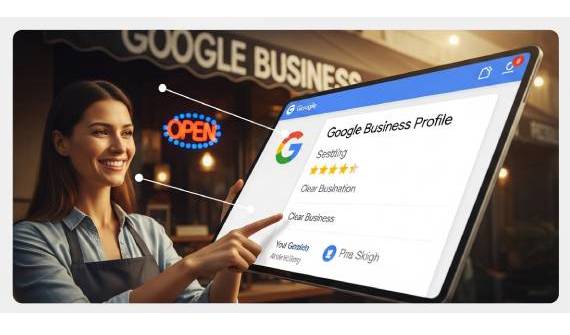
Optimize Your Google Business Profile for Local Visibility
For any business serving customers in a specific geographic area, Google Business Profile (GBP) optimization is the single highest-ROI marketing action available. A fully optimized GBP is what determines whether your business appears in the Local Pack — the map-based results that appear above organic listings for location-qualified searches, capturing significantly more clicks than any organic result on the page.
Complete every field: primary and secondary categories (be specific), individual services listed with descriptions, accurate hours, a keyword-rich business description, current photos, and a regular posting cadence (weekly is ideal). Respond to every review within 48 hours — both positive and negative. Ensure your Name, Address, and Phone (NAP) on your GBP exactly matches what appears in your website footer and on every directory listing. NAP inconsistency is one of the most common and most damaging local SEO errors.
Optimize for Conversions — Not Just Traffic
Traffic without conversion is vanity. A website generating 10,000 monthly visits with a 0.5% conversion rate produces 50 leads. The same website at a 2% conversion rate produces 200. Conversion rate optimization (CRO) applied to existing pages produces immediate revenue improvement without requiring additional content or ad spend — it extracts more value from the audience you already have. HubSpot’s research confirms CRO is the second-most-used optimization technique among marketers, second only to audience segmentation.
Place your primary call-to-action above the fold on every key page. Match your CTA to the visitor’s intent: informational content should invite email subscription or further reading, not an immediate purchase request. Use trust signals — customer reviews, star ratings, certifications, case studies — adjacent to every conversion point. Reduce form fields to the minimum necessary for your workflow. A/B test headline variations, CTA button text, and page layouts using Google Optimize or a similar free tool. Even a 0.5% improvement in conversion rate can double your leads from the same traffic.
Implement in this exact order. It’s tempting to skip to content creation or social media, but technical SEO and on-page optimization must come first. A great piece of content on a slow, non-mobile, technically broken website produces a fraction of the results it would on a solid technical foundation. Fix the foundation, then build the house.
25 Proven Website Marketing Tips — Organized by Category
SEO & Technical Optimization (Tips 1–8)
Tip 1 — Pass Core Web Vitals
Run Google PageSpeed Insights monthly. Fix any failing LCP, INP, or CLS scores immediately — they are direct ranking signals and conversion killers. Compress images to WebP, use a CDN, upgrade hosting, eliminate render-blocking scripts.
Tip 2 — One Unique Title Tag per Page
Every page needs a distinct, keyword-rich title tag under 60 characters. Duplicate title tags tell Google all your pages are about the same thing. This is one of the most common and most impactful on-page errors on small business sites.
Tip 3 — Install Schema Markup
LocalBusiness, FAQ, and Article schema in JSON-LD format help Google and AI tools understand your content precisely — enabling rich results (star ratings, FAQ dropdowns) that improve click-through rate without requiring higher rankings.
Tip 4 — Build Internal Links Intentionally
Link from blog posts to related service pages; from service pages to related blog posts; from every page to your contact page. Use descriptive, keyword-relevant anchor text. Internal linking distributes authority and helps crawlers discover all your content.
Tip 5 — Fix Broken Links Monthly
Broken internal and external links waste crawl budget, discard accumulated link equity, and frustrate users. Run a monthly crawl with a free tool like Screaming Frog (free up to 500 URLs) or Check My Links and fix every 404 error with a 301 redirect.
Tip 6 — Compress and Alt-Text Every Image
Images are the most common cause of slow-loading pages. Compress to WebP format; size to display dimensions (never upload a 4000px image to display at 800px); write descriptive, keyword-relevant alt text on every image — both for SEO and ADA accessibility compliance.
Tip 7 — Submit Your XML Sitemap
Submit your XML sitemap to Google Search Console immediately after launch and after any major content additions. It’s the fastest way to ensure new pages are discovered and indexed — especially pages with limited internal linking.
Tip 8 — Verify HTTPS on Every Page
SSL is a confirmed ranking factor and a trust signal that affects conversion rate. Any page without HTTPS displays a browser “Not Secure” warning — a conversion-killing signal at exactly the moment users are deciding whether to engage with your business.
Tip 9 — Set up Google Search Console before creating content. Search Console shows you exactly which queries trigger your pages, your average ranking position, and your click-through rate for each query. This data tells you what to optimize, what to create next, and where your biggest traffic opportunities are — all before you spend time and budget on new content.
Content Marketing (Tips 10–15)
Tip 10 — Answer One Question Per Page
Every piece of content should have a single primary search query it is designed to answer. Pages trying to answer multiple unrelated queries confuse both users and search engines. One keyword, one intent, one page — with a clear answer delivered in the first paragraph.
Tip 11 — Update Old Content Before Creating New
Refreshing an existing high-authority page with current information produces faster rankings improvements than creating a new page. Content lifecycle research shows refreshed content improved organic traffic by 28% in 2025. Audit your top-traffic pages quarterly and update them.
Tip 12 — Add FAQ Sections to Every Key Page
FAQ sections match the conversational query format that AI search tools favor for citation. Mark up each FAQ with FAQ schema. 5–8 questions per page, answering the most common objections, concerns, and follow-up questions your customers ask in real life.
Tip 13 — Repurpose Content Across Formats
A comprehensive blog post can become a short-form video, a social media carousel, an email sequence, a podcast episode, and a webinar segment. Repurposing multiplies your content’s reach without proportionally increasing production time — delivering a 32% average ROI improvement.
Tip 14 — Target Long-Tail Keywords First
Long-tail keywords — specific, multi-word phrases — have lower competition and higher buyer intent than broad, high-volume terms. “emergency plumber Tucson” converts better than “plumbing.” Build authority on long-tail terms first, then expand to broader competitive keywords as domain authority grows.
Tip 15 — Use Headings as Navigation Signals
H2 and H3 headings are what skimming readers use to decide whether to read more — and what Google uses to understand your page structure. Write headings that describe exactly what follows, include keywords naturally, and use the format of a question when appropriate to match voice and AI search patterns.
Email, Local SEO & Social Media (Tips 16–20)
Tip 16 — Offer a Lead Magnet on Every Page
Every visitor who leaves without joining your email list is gone forever, with no way to bring them back. Offer something genuinely valuable (guide, checklist, template, or tool) in exchange for an email address on every high-traffic page. One good lead magnet can convert 3–5% of visitors into subscribers.
Tip 17 — NAP Consistency Across All Platforms
Your business Name, Address, and Phone must be identical on your website footer, Google Business Profile, Yelp, BBB, Apple Maps, and every directory listing. Even minor formatting differences erode local ranking signals. Audit citations annually and after any business information change.
Tip 18 — Respond to Every Google Review
Review response rate is a local ranking signal and a trust indicator for potential customers. Respond to positive reviews with specific gratitude. Respond to negative reviews with professionalism and an offer to resolve the issue. Review management is the most underutilized and highest-trust-impact action available to local businesses.
Tip 19 — Create Location-Specific Pages
If you serve multiple cities or neighborhoods, create a dedicated landing page for each one with genuine, location-specific content. Each page expands your geographic ranking footprint independently — ranking for “plumber Marana AZ” and “plumber Oro Valley AZ” in addition to Tucson.
Tip 20 — Prioritize One Social Platform Deeply
A strong, consistent presence on one platform consistently outperforms a mediocre presence on five. Choose the platform where your audience is most active. Post consistently. Engage genuinely. Build the audience before expanding to additional channels.
Tip 21 — A/B Test Subject Lines for Every Email
Email open rates average 20–40% depending on industry — meaning 60–80% of your list never reads your newsletter. A/B testing two subject line variants on every send reveals which language, framing, and format your specific audience responds to, compounding improvement across every future send.
Conversion Optimization & Analytics (Tips 22–25)
Tip 22 — Put CTA Above the Fold
The majority of visitors never scroll to the bottom of a page. If your primary call-to-action is only visible after scrolling, a significant percentage of visitors never see it. Place your most important CTA within the first visible screen on every key page — before any scrolling is required.
Tip 23 — Display Social Proof at Conversion Points
Star ratings, customer testimonials, case study results, professional certifications, and client logos placed adjacent to your call-to-action reduce the perceived risk of taking action. Trust signals at conversion points consistently increase conversion rates — often significantly, with minimal implementation effort.
Tip 24 — Set Up Conversion Tracking in GA4
If you’re not tracking which pages and traffic sources produce leads, you have no way to know what’s working or where to invest next. Set up conversion events in Google Analytics 4 for form submissions, phone call clicks, and any other key actions. This data transforms analytics from a vanity exercise into a decision-making tool.
Tip 25 — Conduct a Monthly Content Audit
Identify your top 20% of content (highest traffic, engagement, and conversions) and analyze what made it effective — then replicate those elements. Identify your bottom 20% and determine whether to update, consolidate via 301 redirect, or remove. A shrinking, higher-quality content library consistently outperforms a growing, mediocre one.
The single most important thing you can do today: install Google Analytics 4 and verify Google Search Console if you haven’t already. Every other tip in this list requires data to implement effectively — and both tools are free. Don’t create another page, publish another post, or run another campaign until you can measure its impact.
How to Use Analytics to Turn Data Into Marketing Improvements
Only 29% of marketers measure their content marketing ROI effectively — meaning 71% are investing time and budget without reliable feedback on what’s working. Analytics transforms your website from a publishing platform into a learning engine. Moz’s SEO guide confirms that measuring and acting on performance data is the primary differentiator between marketing programs that compound and those that plateau.
Organic Traffic by Source
In GA4, track sessions by source/medium. Which channels bring the most visitors? Which bring the highest-quality visitors (lowest bounce, most pages per session, most conversions)? Invest more in channels with the best quality-to-volume ratio, not just the most volume.
Keyword Impressions and CTR
In Google Search Console, find keywords where you have high impressions (appearing in results) but low CTR (few clicks). These are title tag and meta description optimization opportunities — improving them can double clicks from the same ranking position without any SEO work.
Top Landing Pages
Identify which pages visitors enter your site through. Are these pages optimized for conversion? Do they have clear next steps? Are they delivering on the promise of the search query that brought the visitor there? Top landing pages deserve conversion optimization attention first.
Exit Pages
Which pages do visitors leave from most often? If key service or contact pages have high exit rates, they have a content or conversion problem worth diagnosing. Sometimes a single addition — a testimonial, a clearer CTA, an FAQ section — can significantly reduce exit rate on a high-value page.
The Website Marketing Mistakes That Prevent Results
These are not theoretical risks — they are the documented reasons most small business websites fail to generate meaningful inbound traffic and leads despite time and investment. Each one is preventable with the right strategy in place before execution begins.
No Documented Marketing Strategy
Publishing content, running social media, and sending emails without a documented plan produces reactive, inconsistent, unmeasurable results. Documented strategies are 60% more likely to be effective than undocumented ones.
Optimizing for Traffic, Not Conversions
Celebrating high traffic numbers while ignoring conversion rate is marketing vanity. 10,000 monthly visits at 0.5% conversion is 50 leads. 3,000 visits at 2% is 60 leads. The higher-traffic site produces fewer results.
Ignoring Technical SEO
Creating excellent content on a slow, broken, or non-mobile website is like publishing a great book with no distribution. Technical SEO is the prerequisite for every other marketing investment — without it, everything underperforms.
Not Building an Email List
Every visitor who leaves without joining your email list is permanently gone — no way to bring them back. Social followers can be lost to algorithm changes. Search rankings fluctuate. An email list is the only truly owned audience.
Publishing Without Promoting
Organic search rankings take time to develop. Publishing without active promotion — email, social, outreach — means new content sits invisible for months. Active distribution in the first 30 days accelerates initial traction dramatically.
Inconsistent Publishing Schedule
Publishing 20 articles in January then going dark for three months signals inconsistency to both Google and your audience. Consistent publishing — even at a low volume — builds more authority and audience trust than bursts followed by silence.
No Analytics or Conversion Tracking
Marketing without measurement is guesswork. If you don’t know which pages produce leads, which channels drive quality traffic, and which content performs best, you cannot systematically improve. GA4 and Search Console are free — there is no excuse not to use them.
Abandoning SEO Before Seeing Results
Organic SEO typically takes 3–6 months to produce meaningful results. Businesses that stop after 60 days conclude it doesn’t work — when they simply didn’t allow the strategy time to mature. Patience and consistency are the most underrated SEO skills.
Keyword Stuffing or Thin Content
Content created to satisfy a keyword requirement rather than genuinely serve the reader produces high bounce rates, low engagement, and declining rankings. Google’s Helpful Content system actively penalizes content that exists primarily for search engines rather than real users.
Outdated Google Business Profile
An unclaimed, incomplete, or outdated GBP is the most common local SEO mistake. It’s free, takes under two hours to optimize, and is the single highest-impact local visibility action available to any small business serving a geographic area.
Website Marketing Checklist: 25 Actions to Audit Right Now
Run through this checklist against your current website. Every unchecked item is an active gap limiting your traffic, leads, or conversions.
Every One of These Tips Is Implementable — But You Don’t Have to Do It Alone
The most effective website marketing strategies combine consistent technical excellence, high-quality keyword-driven content, and rigorous conversion optimization — all measured and improved monthly. Tucson SEO builds and manages exactly this kind of inbound marketing system for small businesses, producing compounding traffic and lead growth month after month.
Tucson SEO · Free Quote · Free SEO Audit · SEO Services
Website Marketing Tips: Your Questions Answered
The most common questions small business owners ask about inbound marketing, website optimization, and growing traffic and leads.
-
What is inbound marketing and how does it differ from outbound marketing?
Inbound marketing is a strategy that attracts potential customers to your website through valuable content, SEO, and engagement rather than interrupting them with advertisements. Instead of pushing messages at people (outbound), inbound marketing pulls them in by answering their questions, solving their problems, and building trust over time.
Inbound marketing generates 3x more leads than outbound marketing at 62% less cost. It includes SEO, content marketing, email marketing, social media engagement, and conversion rate optimization — all designed to attract the right people at the right time with the right message. The ROI advantage compounds every year as content assets accumulate and email lists grow.
-
What are the most important on-page SEO elements for a small business website?
The most important on-page SEO elements are: unique title tags (under 60 characters, target keyword early), meta descriptions that describe the page and encourage clicks, a single H1 heading per page with the primary keyword, logical H2/H3 subheadings, target keyword in the first 100 words, descriptive image alt text, fast page loading (Core Web Vitals compliance), mobile-friendly responsive design, HTTPS security, and internal links to related pages with descriptive anchor text.
Each of these signals communicates your page’s relevance and trustworthiness to Google. Missing any one of them is an opportunity cost — you are leaving ranking potential on the table for every page where it’s absent.
-
How do I increase website traffic without paid advertising?
The most effective ways to increase website traffic without paid advertising: publish consistent, high-quality content optimized for keywords your target audience searches for; optimize your Google Business Profile for local search visibility; build backlinks by creating valuable resources and earning mentions from authoritative sites; share content actively on social media; grow an email list and send regular newsletters to drive repeat visits; and create a systematic internal linking architecture that distributes authority across your site.
Companies using blogs generate 55% more website traffic and 67% more leads compared to non-blogging peers — consistent content publishing is the single most reliable driver of organic traffic growth for most small businesses.
-
What is conversion rate optimization (CRO) and why does it matter?
CRO is the systematic process of increasing the percentage of website visitors who take a desired action — submitting a form, calling, downloading, or purchasing. It matters because it extracts more value from your existing traffic without requiring additional marketing spend.
Even a 1% improvement in conversion rate on a page receiving 1,000 monthly visitors produces 10 additional leads per month — 120 more leads annually. CRO techniques include: placing CTAs above the fold, reducing form fields to the minimum, using trust signals near conversion points, A/B testing headlines and button text, improving page speed, and matching landing page content precisely to the intent of the search query that brought the visitor.
-
How often should I publish new content on my website?
Consistency matters more than volume. A sustainable cadence of 2–4 quality posts per month produces meaningful compounding results over 6–12 months for most small businesses. The critical principle: set a schedule you can maintain indefinitely, then stick to it.
One genuinely useful, well-researched article per week consistently outperforms four generic posts per week followed by months of silence. Google rewards consistent publishing cadence with more reliable crawling and indexing — and audiences build more trust with businesses that show up predictably than those that burst and disappear.
-
What is the most effective email marketing strategy for driving traffic to my website?
The most effective email marketing strategy for website traffic combines: a valuable lead magnet to build your list, a welcome sequence that delivers immediate value, a regular newsletter featuring your best new content with compelling subject lines, and segmented campaigns for different audience interests.
Email delivers an average $42 ROI per $1 spent — the highest of any marketing channel — because it reaches people who have already expressed interest in your content, with no algorithm between you and your subscriber. The most consistent website traffic driver after SEO is an engaged email list. Start building yours today with a single lead magnet offer on your most-visited pages.
-
Why is page speed critical for website marketing?
Page speed affects rankings, conversions, and user experience simultaneously. As a confirmed Google ranking signal, slow pages are suppressed in search results relative to faster competitors. On the conversion side, a one-second delay in mobile load time reduces conversions by up to 20%, and 53% of users abandon pages that take more than 3 seconds to load.
The primary causes of slow small business websites: uncompressed images (the most common), too many plugins, cheap shared hosting, and unminified CSS and JavaScript. Compress images to WebP, use a CDN, upgrade hosting, and eliminate unused plugins. Check your Core Web Vitals scores free at Google PageSpeed Insights.
-
How do I use Google Analytics to improve my website’s marketing performance?
Use Google Analytics 4 to improve marketing performance by tracking: Acquisition — which channels bring the most and highest-quality visitors. Engagement — which pages have the highest time on page and lowest bounce rate. Conversions — set up goals (form submissions, phone calls) and track which sources produce them. Landing pages — identify entry pages and optimize them for conversion.
Also use Google Search Console alongside GA4: Search Console shows which queries trigger your pages, your average ranking position, and CTR — revealing title tag and content optimization opportunities you’d otherwise miss. Monthly review of these metrics produces a clear improvement roadmap based on data, not intuition.
-
What social media platforms are best for driving website traffic?
Platform effectiveness depends on your audience and content format. Generally: LinkedIn is the highest-quality traffic source for B2B businesses and thought leadership. Facebook drives significant traffic for B2C local services and community-based content. YouTube is the most powerful long-term social traffic source — videos continue ranking and sending traffic for years. Pinterest is underrated for visual niches — pins drive evergreen traffic for months after posting.
Focus on 1–2 platforms where your audience actually is, rather than a mediocre presence across six. Post consistently, engage genuinely, and build the audience before expanding to additional channels. Each platform rewards native behavior — adapt your content format to each rather than cross-posting identical content.
-
What are the most common website marketing mistakes small businesses make?
The most common mistakes: no documented content or SEO strategy; targeting high-competition keywords before building domain authority; publishing without actively promoting content; no email list building; no conversion optimization — driving traffic to pages with no clear CTA; ignoring page speed and mobile experience; treating social media as a one-way broadcast channel; not measuring performance with Analytics and Search Console; and abandoning SEO efforts before they have time to produce results (typically 3–6 months for meaningful organic growth).
Each of these mistakes is preventable with a clear, documented marketing strategy written before execution begins. The most successful small business marketers are not those with the biggest budgets — they are the ones with the clearest strategies and the most consistent execution.



Use Social Media as a Distribution and Engagement Channel
Social media’s most important function for inbound marketing is content distribution — getting your published content in front of your audience faster than organic search alone can achieve. Every piece of content you publish should have a distribution plan that includes social sharing. But effective social media goes beyond broadcasting: engagement, responding to comments, joining conversations in your niche, and building community relationships are what turn social followers into website visitors and subscribers.
Focus on 1-2 platforms where your audience actually is rather than maintaining a mediocre presence across six platforms. For most B2B small businesses, LinkedIn and a secondary platform (Facebook, YouTube, or Instagram depending on your content type) is the right starting point. Repurpose long-form blog content into social-native formats: carousels, short video summaries, quote graphics, and data visualizations. Repurposed content extends reach without proportionally increasing production time.